
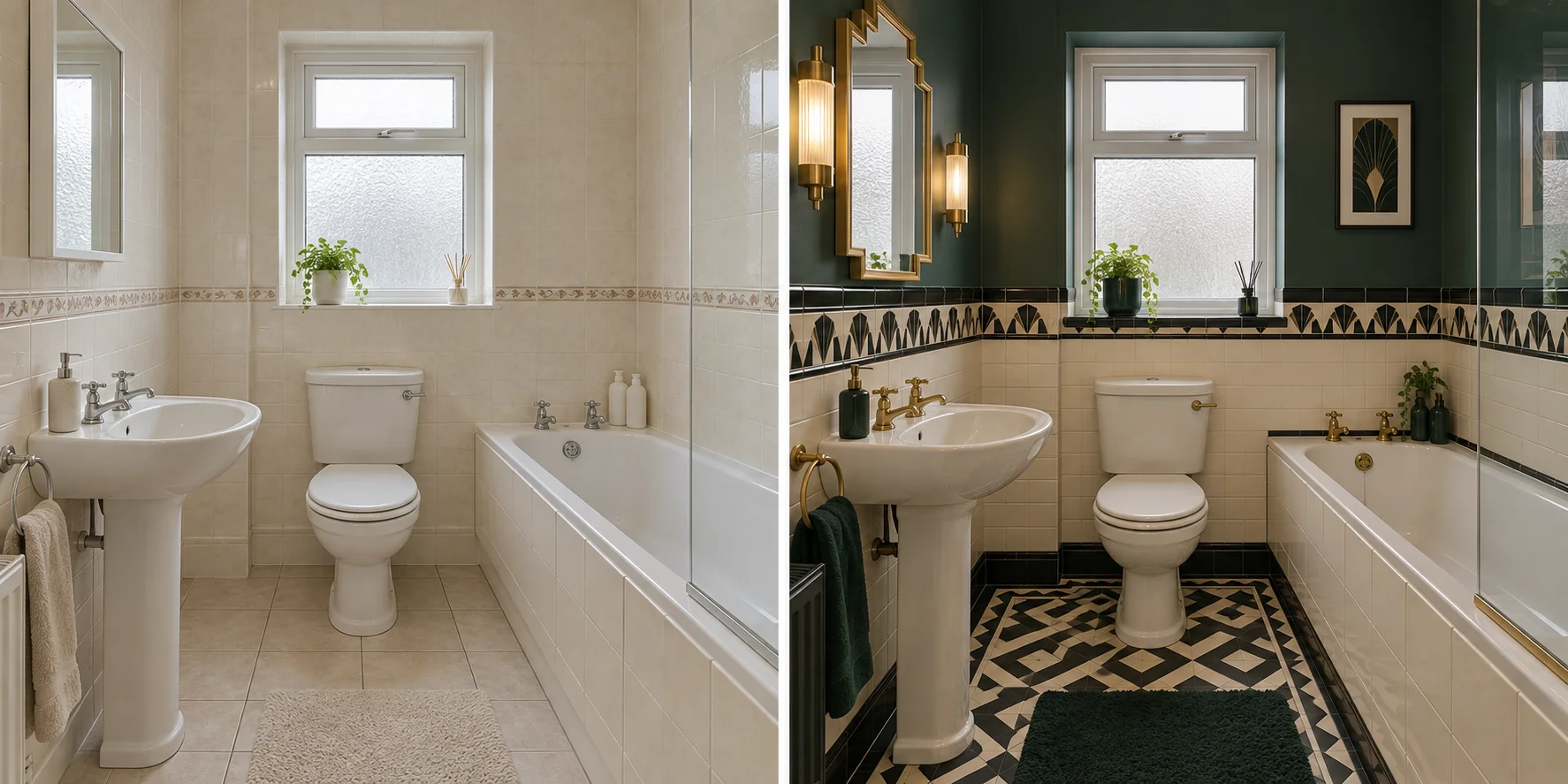
An art deco bathroom before and after should do more than swap furniture. The strongest transformation fixes the room problems first, then uses emerald, gold, black, deep navy and blush, velvet, lacquer, brass, fluted panels, marble, glass and geometric pattern and glamorous wall lights, globe lamps, tiered fixtures and dramatic reflective glow to make the same space feel dramatic, tailored, glamorous and architectural.
This guide explains what changes between the before photo and the after concept, which design moves matter most, and how to test the look on your own room with Remodelling Centre before you buy materials or brief a contractor.
Builder-grade tiles, dim mirror lighting, cramped vanity storage, visual clutter and surfaces that feel cold rather than considered.
An art deco direction creates a dramatic, tailored, glamorous and architectural room by using geometry, sheen and symmetry to make the room feel more intentional and dressed.
Art Deco bathroom concept comparison
What changes in an art deco bathroom before and after
The before version of this bathroom usually has a few connected problems: builder-grade tiles, dim mirror lighting, cramped vanity storage, visual clutter and surfaces that feel cold rather than considered. A good redesign does not hide those issues with decorative styling. It solves the room in layers, starting with the layout, then the finish direction, then furniture scale, lighting and the final details that make the concept feel believable.
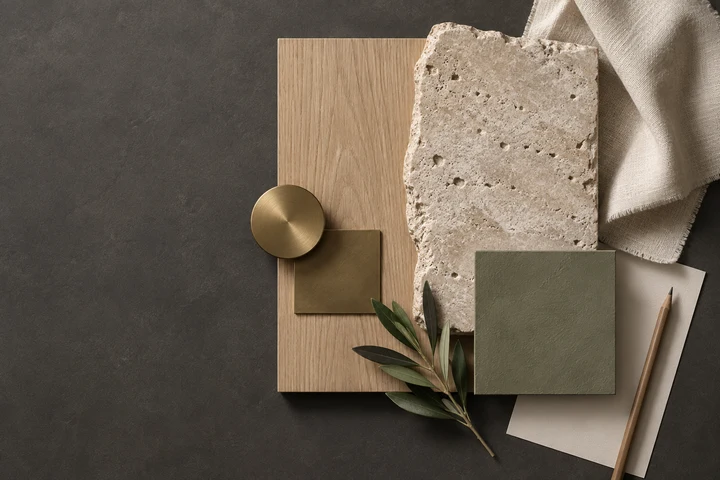
For an art deco result, the after image should immediately read as dramatic, tailored, glamorous and architectural. That comes from a palette of emerald, gold, black, deep navy and blush, supported by velvet, lacquer, brass, fluted panels, marble, glass and geometric pattern. The style works best when the major surfaces and the smaller accents agree with each other, so the room never feels like a random collection of trend references.
Layout moves for an art deco bathroom
Start with the existing architecture. Remodelling Centre is most useful when it keeps the camera angle, walls, windows and room type intact while reimagining the design language. In this bathroom, the layout goal is to make the vanity wall read cleanly, simplify the wet zone, brighten the mirror area, and choose finishes that feel fresh without ignoring durability. That gives the AI redesign a practical foundation instead of a pretty room that would be hard to build.
Furniture and decor should support that layout rather than fight it. An art deco version can use curved seating, symmetrical storage, statement mirrors and strong decorative shapes. In this room the most visible elements are usually tiles, vanities, mirrors, taps, wall lights, shower glass, niches, storage and wall colour, so those are the areas where the before and after comparison should feel most specific.
Palette, materials and lighting
Colour is the fastest way to make the after image feel different, and also where many redesigns become unrealistic. Keep the palette focused on emerald, gold, black, deep navy and blush, then repeat those tones across surfaces, upholstery, trim and accent pieces. Repetition makes the concept easier to understand and far easier to shop on a real budget.
Materials carry the style. An art deco bathroom should lean into velvet, lacquer, brass, fluted panels, marble, glass and geometric pattern. Lighting needs the same discipline: glamorous wall lights, globe lamps, tiered fixtures and dramatic reflective glow. The after image should look better because the light has a job, not because the room has been made artificially bright.
Checklist before you generate this look
- Photograph the room in daylight from a stable, wide angle.
- Clear temporary clutter but keep fixed walls, windows, doors and built-ins visible.
- Read the after image for layout, palette, lighting and storage ideas separately.
- Check the idea against the £ cost guide before buying finishes.
Generate an art deco before and after from your bathroom
Upload a photo of your bathroom to Remodelling Centre and preview this style on your actual room after processing, across 36 interior styles, before you make any design decisions.
Upload a photoFrequently asked questions
What makes a good art deco bathroom before and after?
A strong before and after keeps the same room recognisable while improving the design logic. The after version should resolve layout, storage, lighting, palette and material problems in a way that fits art deco style, rather than simply adding new furniture.
Can I use AI redesign ideas before hiring a contractor?
Yes. AI redesigns are useful before contractor conversations because they clarify the visual direction, finish preferences and rough scope. They do not replace technical drawings, measurements, building control or professional advice, but they make the first planning conversation far more concrete.
How does Remodelling Centre create the redesign?
Upload one room photo, choose a style, and the AI returns a realistic redesign after processing. The same tool handles virtual staging for empty rooms, so you can preview a furnished, finished look before you spend.
Related room and style ideas
Compare nearby rooms, alternate styles, renovation costs and design guides: