
What snagging is and when to do it
Snagging is a structured inspection of completed work against the agreed scope. It is not a hunt for perfection; it is a fair review of whether the job has been done to the standard everyone discussed. Do it before the final payment and before any retention is released.
Some items only appear once the house is warm, the heating is running and the rooms are actually used. Plan a second, shorter review after a few weeks, and keep the first list open until it is closed.
Prepare the evidence
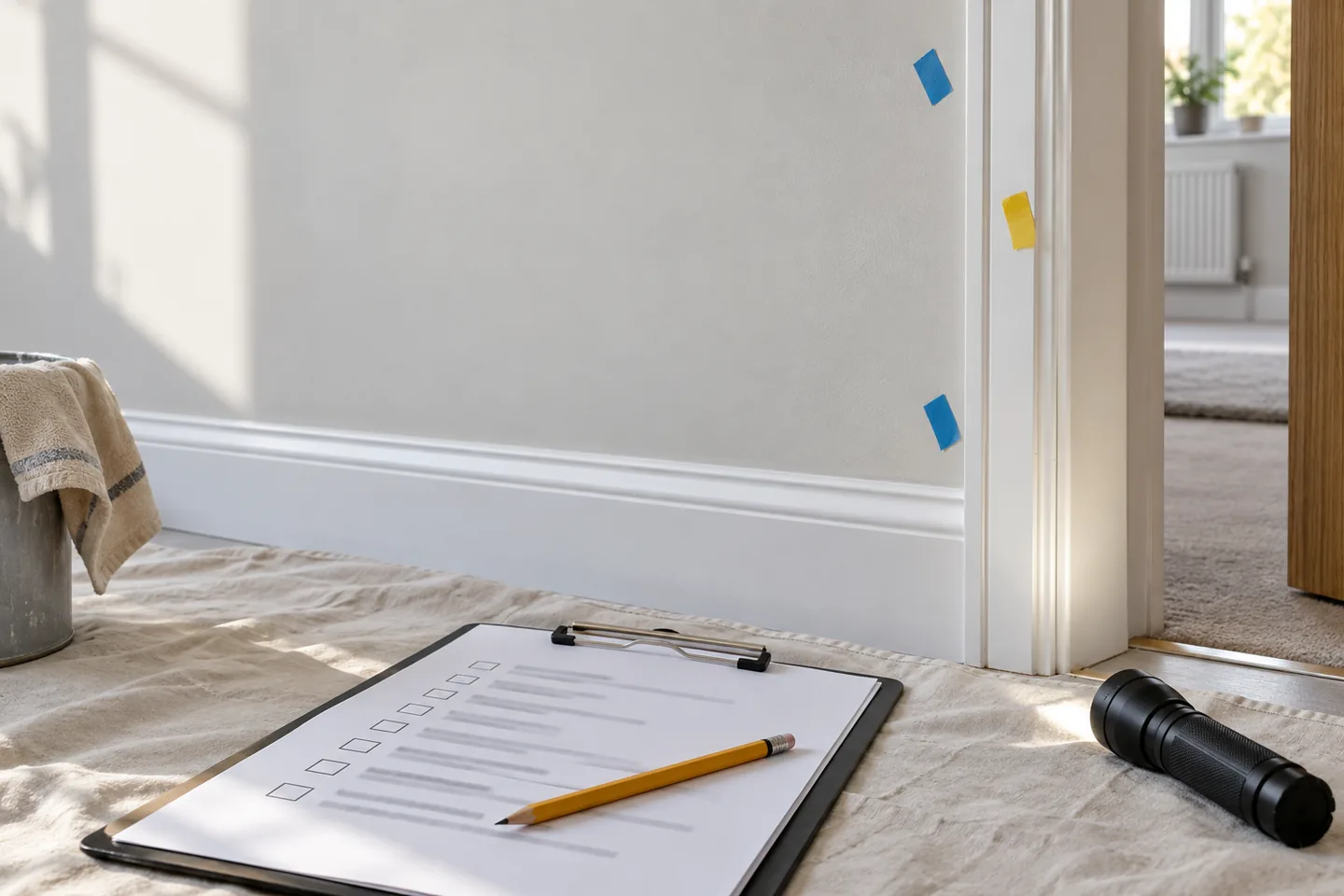
Bring the agreed scope, drawings, specifications and variation records. Use a printed checklist and photograph each snag with something for scale, such as a coin or a tape measure. Mark items lightly with tape so they are easy to find during the fix visit.
- Keep one numbered list; scattered messages lose items.
- Note the room, the item, the standard it fails and the evidence.
- Agree who fixes each item before dates are set.
- Photograph the same item after the fix and close the line.
Walls, ceilings, floors and joinery
Look along walls in raking light for hollow or undulating plaster, visible joints and missed filling. Check corners, reveals and ceilings for cracks and paint edges. Test every door and window for opening, closing, latching, locking and alignment, and check skirting, architraves and joinery for tight joints and consistent gaps.
Walk the floors and listen. A squeak or a hollow tile is easier to fix before the furniture arrives. Check thresholds, seals and any transition strips, because these are the details that show daily wear first.
Kitchens, bathrooms and wet areas
Run every tap and check flow, drainage, wastes and traps for leaks under load. Check seals and silicone lines around showers, baths, basins and worktops, and confirm extract fans actually clear steam and that the ducting is connected to outside. Open and close every cabinet, drawer and appliance, and check that integrated appliances align.
Fill the bath, empty it, and watch the waste. Run the shower for several minutes and check the surrounding surfaces. Water problems that appear in week one are cheap to fix; the same problem in year two is not.

Electrics, heating and controls
Ask for the electrical certificates and confirm the consumer unit is labelled clearly. Test sockets, switches, lighting circuits, smoke alarms and heating controls. Check radiator valves, thermostats and any underfloor heating have been commissioned, and confirm that safety devices are fitted and working.
Ask for a short handover on the controls, including how to reset the heating and where the isolation valves are. A five-minute explanation prevents an emergency call-out later.
External works and making good
Check thresholds, drainage, gullies, sealing and external finishes. Confirm scaffolding is removed and any fixing holes are made good. Inspect the garden, paths and boundaries for damage during the work, and ask how rainwater goods and any new flues or vents should be maintained.
External items are easy to overlook in winter and hard to fix in a wet week. Take photographs while the weather is reasonable and add anything that needs attention to the same numbered list.
Paperwork and final payment
Collect certificates, guarantees, manuals and commissioning records. Agree the snag list in writing with dates for each item, and hold a retention or final balance until the list is closed and the certificates are handed over. Keep a signed completion statement that records any agreed credits or outstanding items.
Then pay the final balance promptly. The purpose of snagging is to make the finish right, not to delay payment for work that has been done well.

Frequently asked questions
How long should you hold back final payment for snagging?
It depends on the contract, but a retention that stays with you until snags are fixed and certificates are handed over is normal on larger projects. Agree the amount and the release conditions in writing before work starts.
What if the builder refuses to fix snags?
Start with the written list and the agreed scope. If there is no response, use the contract's dispute process, and consider professional advice. Keeping evidence and payments staged limits your exposure.
Should I pay for an independent snagging inspection?
On complex or high-value projects, an independent inspector can be worth the fee because they check details owners often miss. For smaller jobs a structured self-inspection with photographs and tests is usually enough.
Snagging is not a confrontation; it is the quality conversation the contract always assumed you would have. Take your time, write it down, and let the final payment be the last item on the list, not the first.
This guide is general information, not a professional inspection. For significant works, consider an independent surveyor and confirm your contractual rights.