
Frame materials compared
uPVC is the lowest-cost option with good thermal performance and low maintenance, but quality varies enormously with the profile and the reinforcement inside it. Aluminium gives slim sightlines and strength, which suits large openings, at a higher price. Timber offers character and repairability, and needs maintenance unless it is aluminium-clad.
Composite and hybrid frames try to combine the benefits. Ask what is actually inside the frame, because a timber core with a plastic skin behaves differently from a hollow profile. The frame is most of the window, so it deserves the same attention as the glass.
Glazing: what the numbers mean
The U-value measures heat loss, and lower is better, but the frame and the installation matter just as much. Low-emissivity coatings, argon or krypton fill and warm-edge spacers all improve performance. Solar gain and light transmission affect overheating and daylight, not just heat loss, so a glass that is excellent in winter may be uncomfortable in summer.
- Acoustic glazing needs different glass thicknesses and laminated panes rather than simply a thicker unit.
- Safety glazing is required in critical locations, such as near doors and at low level.
- Toughened or laminated glass is a specification choice, not an upgrade to guess at.
- Ask for the actual unit specification, not just the marketing name.
Ventilation and airtightness
Background ventilators or trickle vents are usually required to provide controlled ventilation, and a more airtight window can make an existing damp or condensation problem worse if ventilation is not planned. Extract fans and whole-house ventilation interact with window choice more than most people expect.
Think about how the house is ventilated in summer and in winter, and whether any rooms rely on an open window. If the answer is yes, the replacement should not remove that option.
Style and the house
Sash, casement, flush and bay windows each have appropriate periods and proportions. Glazing bars, horn details and reveal depths visibly change how a facade reads. Matching the original proportions is usually better than squeezing a modern profile into an opening designed for something else.
Conservation areas and listed buildings may restrict materials and details, and some require consent. Check before ordering, because a window that cannot be fitted is an expensive object to store.
Compliance and guarantees
Replacement windows are usually covered by building regulations for energy efficiency, and competent person schemes handle the notification in many cases. Ask for the scheme certificate or the building control approval and keep it with the house file. Check the guarantee length, what it covers, whether it is insurance-backed, and who handles defects.
A guarantee that depends on a company that may not exist in ten years is worth less than one backed by an insurance scheme. Ask the question directly and get the answer in writing.
Installation determines performance
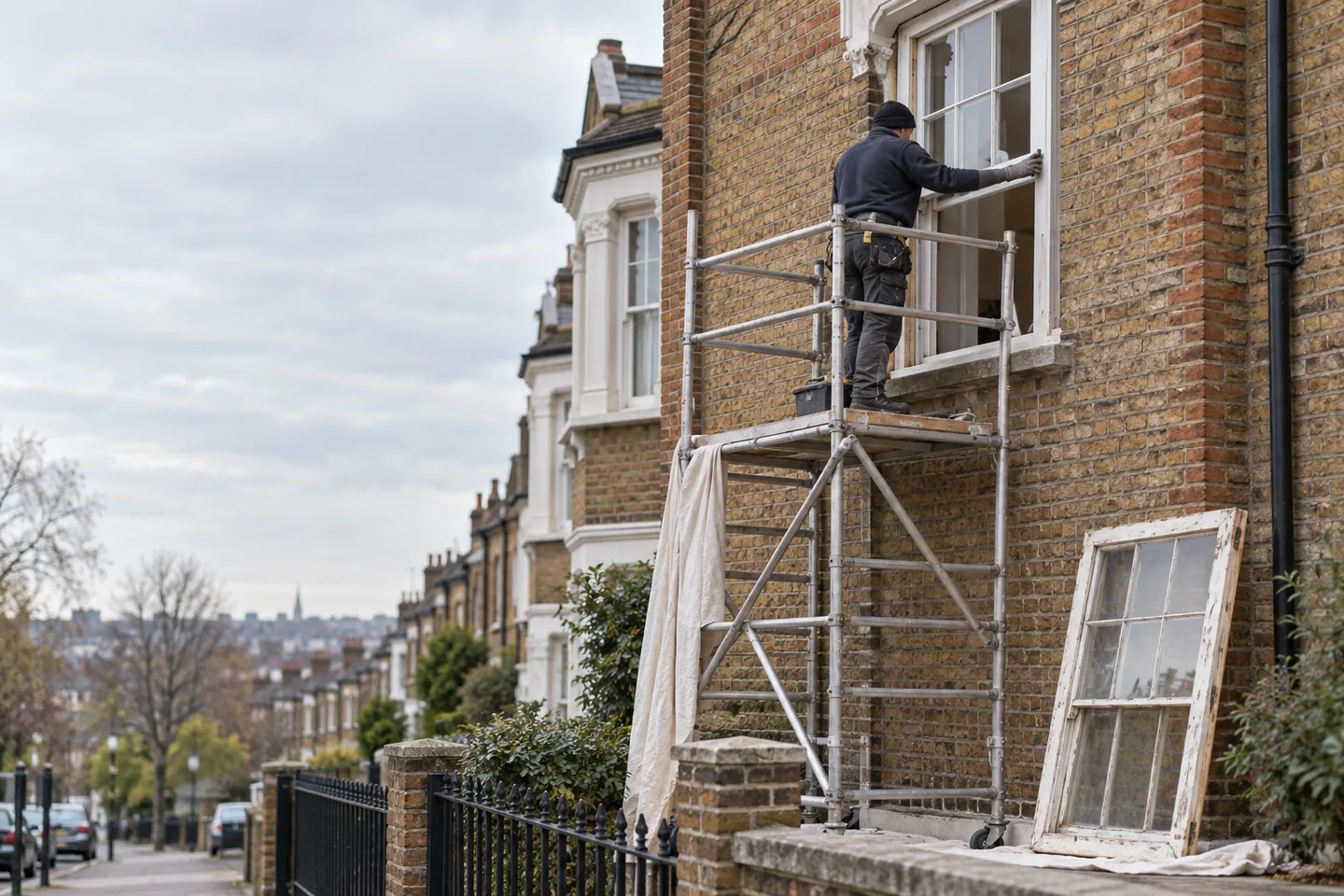
A good window installed badly can underperform a basic window installed well. Insulation, airtightness tape, correct packers and sealed reveals all matter. Damp and water management at the sill and reveal should be planned, and making good inside and out is part of the job rather than an extra to discover later.
Ask how the installers will protect the room, how long each opening will be open, and what happens if the weather turns. On a cold day, a house with three openings is a different project from one with one.
Ordering checklist
Measure openings precisely, including reveals, sills and any out-of-square conditions. Confirm frame material, glazing specification, hardware, handles, vents and security. Agree access, scaffold, waste removal, making good and a programme, and pay against completion rather than deposit alone.
Frequently asked questions
Do I need permission to replace windows?
Replacing like-for-like windows usually falls under permitted development and building regulations, but flats, listed buildings and conservation areas have extra restrictions. Check with your local planning authority before ordering.
Are triple-glazed windows worth it in the UK?
Triple glazing can help in noisy or exposed locations and where space allows deeper frames, but it costs more and reduces light slightly. For many UK homes, good double glazing with a well-installed frame performs very well.
How long do replacement windows last?
It depends on the material and maintenance: uPVC commonly lasts decades, aluminium longer, and timber can last very long if maintained. The guarantee and the installation quality matter as much as the material.
Windows are one of the few purchases that affect comfort, noise, energy, appearance and maintenance at the same time. Get the specification and the installation detail right, and the rest follows.
This article is general guidance. Confirm energy, ventilation, planning and building control requirements with a qualified supplier and your local authority.