
Answer: The most useful 2026 interior design trends UK homeowners can try now are warmer neutrals, expressive blues and greens, natural texture, darker timber, curved furniture, and layouts that make small rooms work harder. The easiest way to test them is to preview the look on a photo of your own room before spending money.
That makes 2026 less about copying a showroom and more about running a visual experiment: take one clear room photo, choose two or three trends that suit how you live, and see whether they improve the actual space you own.
Key takeaways
- The strongest 2026 direction is warmth: soft whites, clay, olive, warm taupe, chocolate, and blue-based accents are replacing cold grey schemes.
- UK homes benefit most when trends are tested against real constraints such as narrow terraces, north-facing light, radiators, rented walls, and compact storage.
- AI room previews are best used for decisions you can compare visually: wall colour, flooring tone, cabinet finish, furniture scale, lighting mood, and zoning.
- A good trend test should keep the room recognisable, not invent a completely different property.
- Before buying paint, tiles, flooring, or furniture, create one conservative version and one bolder version.
Why 2026 trends are easier to test than previous design cycles
Interior trends used to arrive as magazine spreads: beautiful, expensive, and hard to translate into a semi-detached house in Leeds, a Victorian terrace in Bristol, or a new-build flat in Manchester. In 2026, treat trend research as a shortlist.
Instead of asking, “What is fashionable?”, ask, “Would this improve my actual room?” Many UK rooms have smaller windows, mixed flooring levels, visible heating, awkward chimney breasts, or rental restrictions. A colour that looks calm in a sunlit loft can feel heavy in a north-facing box room.
This is where a room-photo preview becomes useful. A straight-on photo can help you test whether a trend suits your light, proportions, and existing furniture before you commit to paint or a £2,000 sofa.
If you want to try this workflow, you can try the AI studio and preview a trend-led makeover using your own room photo.
The 2026 interior design trends UK homeowners should test first
The following trends are practical, visible, and flexible enough to test on a single room photo.
1. Warm neutrals instead of flat grey
The cool grey period is fading because many homes ended up looking clean but not comfortable. In 2026, the better neutral base is warmer: creamy white, oat, mushroom, stone, taupe, clay, and soft beige-pink. These colours work better with wood, brass, linen, wool, and older furniture.
In a room-photo test, ask for the walls to move from cool grey or bright white to a warm neutral while keeping the floor, windows, and main furniture in place. Then compare whether the sofa looks better and the room feels brighter.
This is especially useful for UK living rooms where daylight changes dramatically between winter and summer. A warm off-white can soften a cold room without making it look beige or dated.
2. Blue as the new confident accent
Blue is one of the strongest colour stories for 2026, from stormy blue-grey to deep indigo and brighter cobalt accents. It can be calm, tailored, or dramatic. For UK homes, blue is often easier to live with than red or yellow because it pairs well with white ceilings, oak floors, black metal, chrome, and older fireplaces.
Test blue in controlled areas first: a media wall, alcove shelving, lower kitchen cabinets, a headboard wall, or a single painted furniture piece. If the AI preview turns the whole room blue and it feels too much, ask for the colour to be limited to joinery or one focal wall.
3. Natural texture over shiny perfection
Another clear trend is a move away from overly polished finishes. Rooms are becoming more tactile: limewash-style walls, slubby linen, wool rugs, fluted wood, rattan, stone, handmade tiles, and imperfect ceramics.
Texture is ideal for AI testing because it changes the mood without always changing the layout. Try a wool rug, linen curtains, a timber coffee table, and matte ceramic lighting, then compare it with glossier finishes.
4. Darker woods and richer furniture tones
Light oak is not disappearing, but 2026 interiors are making more room for walnut, smoked oak, dark-stained pine, mahogany tones, and antique pieces. This creates depth in rooms that have become too pale or flat.
When testing this trend, do not ask for “dark wood everywhere”. Try one or two anchor pieces: a darker dining table, a vintage chest, a walnut media unit, or deeper-toned kitchen stools. The goal is contrast, not heaviness.
5. Zoned rooms for hybrid living
The most practical 2026 layout trend is zoning. Open-plan rooms are not going away, but people want clearer areas for working, eating, relaxing, exercising, and storage. This matters in the UK because many households are still using one room for several jobs.
Test zones by asking for a reading corner, compact desk area, dining bench, media wall, or storage run while preserving walking routes. The best preview is not the prettiest one; it is the one where daily life makes more sense.
For small rooms, a zoning experiment can reveal whether you need new furniture or simply a better arrangement.
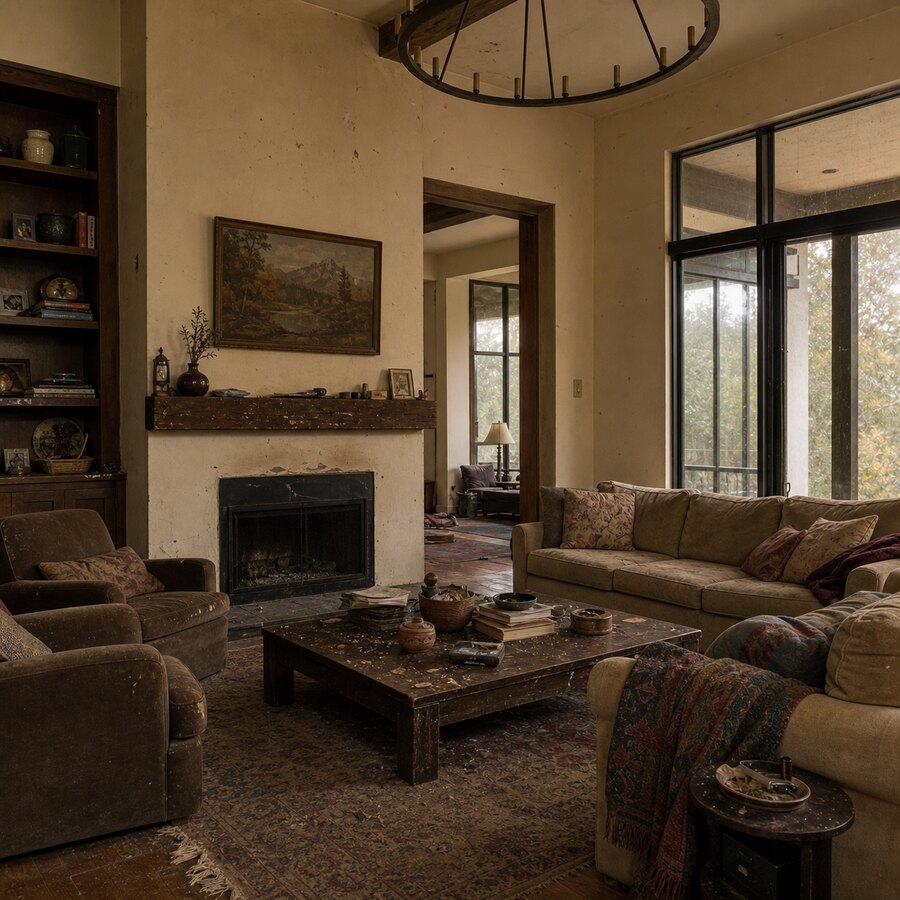
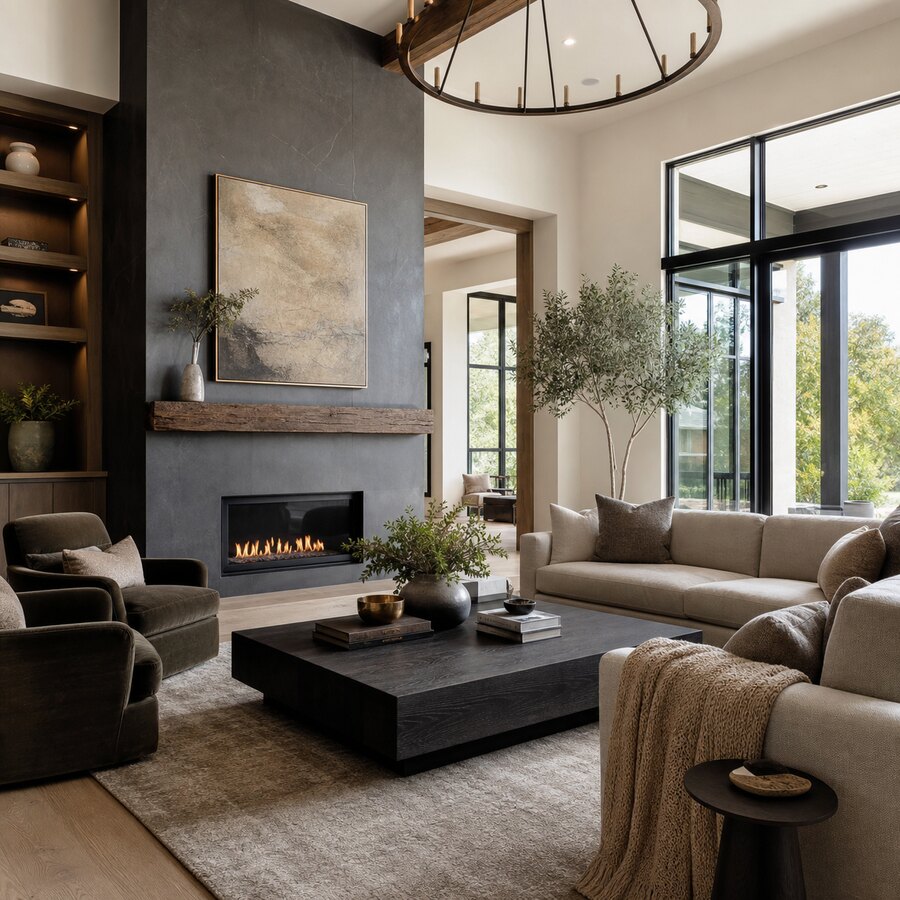
A before-and-after example: testing trend ideas visually
The example below shows the value of comparing a real room with a trend-led direction. The point is not to copy every element, but to see how colour, texture, lighting, and layout choices change the feel of the space.
How to run your own 2026 trend test
A good AI room test starts with a good source photo. Stand in a corner or doorway, keep the camera level, and include as much of the room as possible. Do not hide permanent features such as radiators, awkward alcoves, fireplaces, or sloping ceilings.
Step 1: Choose one room and one problem
Start with a single room. The problem might be “the living room feels cold”, “the bedroom has no character”, or “the office corner feels temporary”. Trends are only useful when they solve a real issue.
Step 2: Pick two or three trend directions
Do not test every 2026 idea at once. Choose a warm neutral palette, a blue accent, richer wood, natural texture, or a zoned layout. Combining too many trends makes it harder to tell what actually improved the room.
Step 3: Keep the fixed elements honest
If you are not replacing the floor, kitchen, windows, or sofa, keep them in the prompt. A makeover that ignores expensive fixed elements may look impressive online but will not help you plan a real project.
Step 4: Compare conservative and bold versions
Create two previews. Version one should be realistic and budget-conscious. Version two can be braver, perhaps with a deeper wall colour.
What to avoid when using AI for interior trends
AI previews are powerful, but they can overpromise. Watch for unrealistic window changes, impossible fireplace moves, furniture that blocks doors, or storage that has nowhere to open.
Also be careful with trend overload. A room with indigo walls, limewash texture, walnut storage, checkerboard flooring, and sculptural lighting may look dramatic in one image but feel busy in real life.
For more grounded examples, compare the living room approach above with small UK living room ideas, a full AI living room before-and-after test, and a practical bathroom renovation cost guide.
FAQ
What are the biggest 2026 interior design trends in the UK?
The biggest practical trends are warm neutrals, blue and green accents, richer wood tones, natural textures, and better-zoned rooms. The best choice depends on your room’s light, size, and existing finishes.
Can I test 2026 interior design trends on my own room photo?
Yes. A clear photo can preview colours, materials, and layouts before you buy anything. This works best when fixed elements such as flooring, windows, and large furniture stay realistic.
Which 2026 colour trend is safest for a UK living room?
Warm off-white, stone, mushroom, and soft taupe are usually safest because they suit changing UK daylight. For more personality, test a blue or green accent on one wall, alcove, or piece of joinery.
Are AI interior design previews accurate enough to plan a renovation?
They are useful for visual direction, colour comparison, and layout ideas, but they are not technical drawings. Use them to narrow decisions, then check measurements, materials, regulations, and trade requirements.
How do I stop a trend-led room from dating quickly?
Keep expensive items timeless and use trends on flexible layers: paint, rugs, curtains, lighting, cushions, art, and smaller furniture. If a bold colour still works with your existing room, it is more likely to last.
What is the cheapest way to try a 2026 trend at home?
Start with paint, fabric, lighting temperature, second-hand furniture, or a rug rather than a full renovation. A room-photo preview can show which single change creates the biggest improvement before you spend.
If you want a low-risk first step, upload one room photo and try the AI studio before you commit to paint, flooring, or furniture.