
A virtual bathroom makeover lets you preview tiles, wall colours, fixtures, and vanity ideas online before you spend money on samples or labour. It is most useful at the planning stage, when you want to compare realistic design directions quickly and reduce the risk of choosing a finish that looks wrong in your actual room.
For UK homeowners, renters, landlords, and renovators, the best approach is to upload a clear bathroom photo, test a few practical styles, then use the strongest visual direction to guide quotes, product shortlists, and conversations with trades.
Key takeaways
- A virtual bathroom makeover is a fast way to test design ideas before committing to tiles, paint, flooring, sanitaryware, or a vanity unit.
- Use your real bathroom photo where possible, because light, layout, ceiling height, and window position change how colours and materials look.
- Focus on the decisions that are hardest or most expensive to reverse: tiles, vanity size, shower screen style, flooring, and wall colour.
- Online previews are not a substitute for measurements, waterproofing advice, or product samples, but they make the early design stage much clearer.
- Keep a short list of two or three looks and use them when asking fitters, tilers, or suppliers for prices in £.
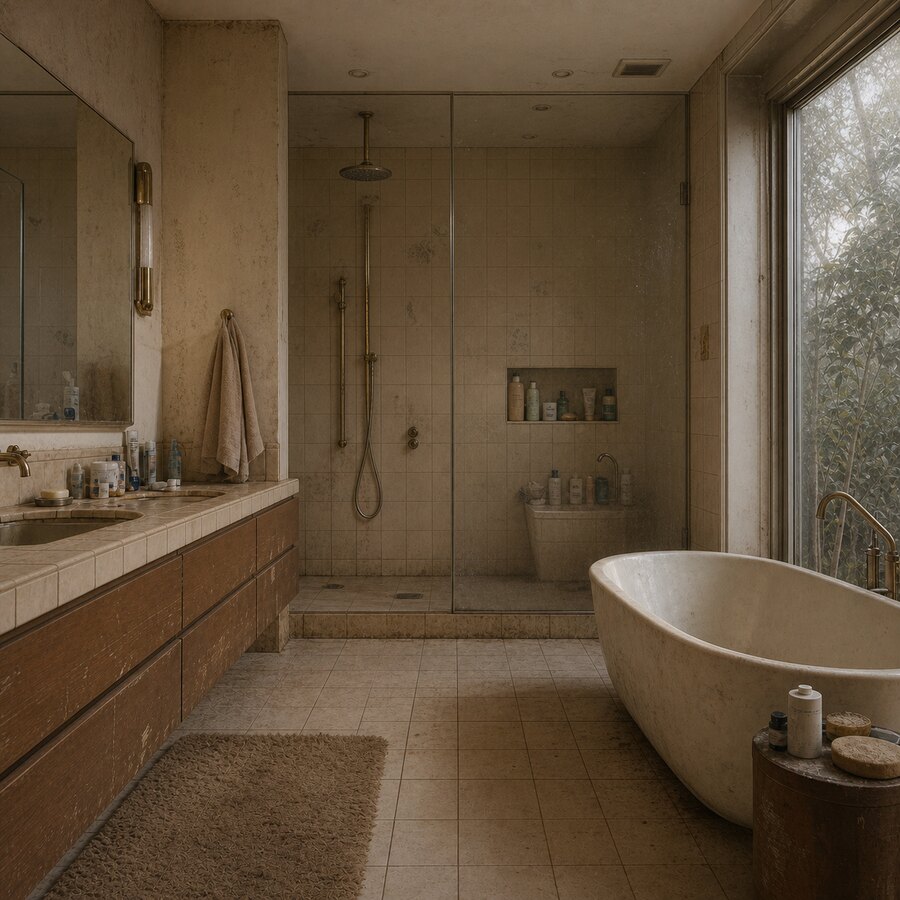
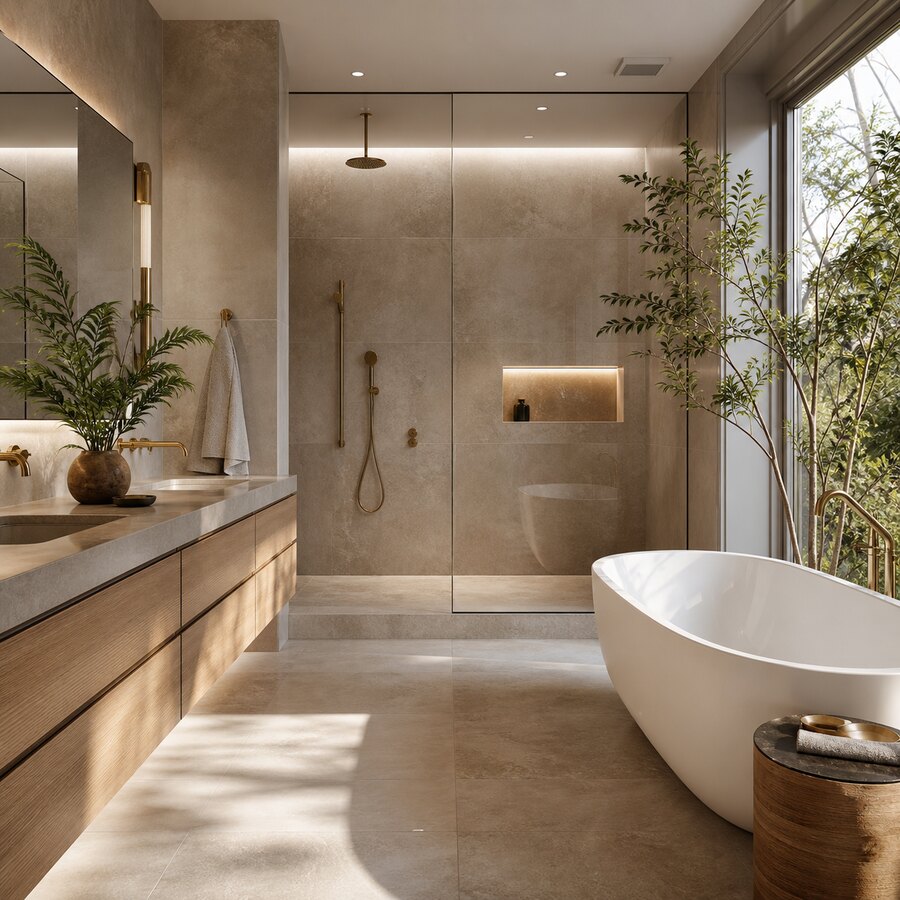
What is a virtual bathroom makeover?
A virtual bathroom makeover is an online design preview created from a bathroom photo or room brief. Instead of guessing how new tiles, colours, taps, mirrors, lighting, and vanity ideas might work together, you can generate visual options and compare them side by side.
The goal is not to produce a final construction drawing. It is to answer a practical question: what could this bathroom look like if we changed the main finishes? That makes it especially useful before you buy tile samples, book a bathroom fitter, or visit a showroom with only a vague idea of what you want.
Commercially, this matters because bathroom choices can get expensive quickly. A wall tile that looks elegant on a display board may feel cold in a north-facing UK bathroom. A dark vanity may look premium in a catalogue but heavy in a narrow cloakroom.
Why preview your bathroom online before renovating?
Bathrooms are small rooms with a high number of fixed decisions. Once plumbing, tiling, waterproofing, and electrics are involved, changing your mind can be costly. Online previews help you make earlier, calmer decisions before the project reaches the stage where every change affects labour and materials.
It also makes conversations with trades clearer. If you can show a fitter that you prefer warm stone-effect tiles, a floating oak vanity, brushed brass taps, and soft off-white walls, the quote conversation becomes more specific and less likely to rely on guesswork.
How to get the best result from an online bathroom preview
To get a useful result, start with a good source photo. Stand as far back as possible, keep the camera straight, and include the major features: bath or shower, basin, vanity area, floor, window, door, and any awkward corners. Natural daylight helps, but avoid very bright glare on glossy tiles or mirrors.
If the room is too small to capture in one image, take two or three photos from different corners. Use the main wall or vanity area as the primary image for your first concept.
You can try the AI studio with your own bathroom photo and compare styles without starting from a blank page. For inspiration, the before and after examples show how photo-based previews can make design changes easier to judge.
Tile ideas to preview in a virtual bathroom makeover
Tiles usually dominate a bathroom visually, so they are one of the best things to test online. Even small differences in tile size, grout colour, and surface finish can change how spacious or busy the room feels.
Large-format porcelain or stone-effect tiles can make a bathroom feel calmer because there are fewer grout lines. They work well in modern bathrooms, wet rooms, and hotel-style schemes, but in smaller UK bathrooms the scale still needs to feel believable.
Classic metro tiles remain popular because they suit period homes, rental refreshes, and compact bathrooms. A virtual preview can help you compare brick bond, vertical stacking, herringbone, and half-height wall tiling. Patterned floor tiles are also worth testing, especially with plain wall tiles and a simple vanity.
Wall colours that work well in UK bathrooms
Bathroom wall colour needs to work with artificial light, daylight, tile tone, and sanitaryware. A virtual bathroom makeover is useful because paint colours often look different next to bright white ceramics and reflective surfaces.
Soft off-white, warm greige, muted sage, clay pink, and pale blue-grey are all practical starting points. In a room with limited daylight, warmer neutrals can stop the space feeling clinical. In a bright bathroom, cooler tones can create a crisp spa-like effect.
For a bolder look, test deep green, charcoal, navy, or terracotta on a single wall or vanity backdrop rather than every surface. Dark colours can look excellent with brass or matte black fixtures, but they need enough lighting to avoid feeling heavy.
Vanity ideas to test before buying
The vanity is both a storage decision and a style decision. It affects how the bathroom functions every morning, but it also becomes one of the main visual anchors in the room. Online previews help you decide whether the vanity should blend in, contrast, or become a feature.
A floating vanity can make a compact bathroom feel lighter because more floor is visible. A freestanding unit can suit traditional homes, cottage-style bathrooms, and family spaces where storage matters. Test painted finishes such as soft green, navy, taupe, or off-black against your tile choice.
Wood-effect vanities add warmth, white vanities keep the room bright, and dark vanities create contrast. None is universally better. The right choice depends on your tile, lighting, floor, and wall colour.
Fixtures, mirrors, and lighting: small choices with a big effect
Once the main surfaces are working, test the details. Taps, shower fittings, towel rails, mirrors, wall lights, and cabinet handles can push the bathroom towards modern, traditional, industrial, spa-like, or minimal.
Chrome remains practical and widely available. Brushed brass adds warmth and pairs well with green, stone, cream, and timber. Matte black can look sharp, especially with white tiles or pale stone, but it needs to be used consistently. Mixing too many finishes can make a bathroom feel unfinished.
Mirrors and lighting deserve special attention. A round mirror can soften a very rectangular room, while a mirrored cabinet adds storage. Wall lights either side of a mirror can improve grooming light, while ceiling spots alone may cast shadows.
What a virtual preview can and cannot tell you
A good virtual bathroom makeover can show style direction, colour balance, visual contrast, and how major finishes may work together. It can help you decide whether to pursue a warm neutral bathroom, a bold dark scheme, a spa-style wet room, or a family-friendly refresh.
However, it cannot confirm plumbing feasibility, waterproofing, electrical zones, structural constraints, ventilation requirements, or the exact cost of labour. Use it as a planning tool, then confirm details with samples and qualified trades.
For budget planning, compare your preferred preview with real-world cost guidance such as bathroom renovation cost ranges in the UK. If you are comparing AI previews with professional help, read AI vs interior designer before deciding how much support you need.
A simple workflow for redesigning a bathroom online
- Take a clear photo of your bathroom from the widest angle you can manage.
- Choose two or three design directions, such as warm spa, modern monochrome, classic metro tile, or natural timber.
- Generate previews for tiles, wall colours, vanity finishes, fixtures, and mirror styles.
- Shortlist the strongest two options and compare them for brightness, storage, practicality, and resale appeal.
- Order samples for the main tile and paint colours before making final decisions.
- Share the chosen direction with fitters or suppliers when requesting quotes in £.
This process keeps the early design stage quick without pretending that renovation is only visual. You still need proper measurements and professional advice, but you reach that stage with a clearer brief.
When should you use a virtual bathroom makeover?
Use a virtual bathroom makeover when you know the room needs change but you are not yet sure what to buy. It is ideal before visiting showrooms, before asking for quotes, before choosing between tile samples, or before deciding whether a vanity, mirror, or fixture finish is right for the room.
It is also useful if several people need to agree on the design. Instead of debating abstract preferences, you can compare visual options and decide which one fits the home, budget, and daily routine. For a fast starting point, try the AI studio and use the preview as the basis for your renovation shortlist.
FAQ
Can I do a virtual bathroom makeover from one photo?
Yes. One clear photo is usually enough to test the main design direction, including tile style, wall colour, vanity finish, and fixture tone. For a more complete plan, take extra photos of the shower, basin wall, floor, and any awkward corners.
Is an online bathroom preview accurate enough for buying tiles?
It is accurate enough for comparing design directions, but not enough to buy final materials without samples. Screen colour, lighting, tile texture, grout, and batch variation can all affect the real result. Use the preview to shortlist, then order samples before committing.
What should I preview first in a bathroom redesign?
Start with the largest and most permanent surfaces: wall tiles, floor tiles, and wall colour. Then test the vanity, shower screen, taps, mirror, lighting, and accessories. This prevents small details from driving the design before the main surfaces are resolved.
Can a virtual makeover help with a small UK bathroom?
Yes. It is especially useful for small bathrooms because scale and contrast matter so much. You can test lighter colours, larger tiles, floating vanities, mirrored storage, and simpler fixture finishes before deciding what will make the room feel bigger.
Will a virtual bathroom makeover replace an interior designer?
Not always. It can be enough for a straightforward refresh or early idea generation, but a designer may still be useful for complex layouts, bespoke joinery, lighting plans, or high-value renovations. Many homeowners use online previews first, then bring a clearer brief to a designer or fitter.