
Short answer: A typical bathroom renovation cost UK 2026 budget is around £4,000-£7,500 for a simple refresh, £8,000-£15,000 for a well-finished mid-range room, and £18,000-£35,000+ for a luxury bathroom with premium fittings or layout changes. The biggest cost drivers are labour, tiling, waterproofing, plumbing movement, electrics, and the quality of visible finishes.
Use this guide to match your budget with a realistic bathroom look before you start buying tiles, taps, or vanity units. A clear style direction helps you spend on the details people notice while protecting money for the hidden work that makes the room last.
Key takeaways
- Keep the existing layout if you want the biggest saving; moving soil pipes, wastes, and hot/cold feeds can quickly change the quote.
- Budget bathrooms can still look calm and modern with simple sanitaryware, good paint colours, and targeted tiling.
- Mid-range projects usually give the best balance of durability, storage, lighting, and style choice.
- Luxury bathrooms need budget for invisible work, not just expensive brassware or large-format tiles.
- Always hold back a contingency of around 10-15% for damaged floors, old pipework, damp, or extraction upgrades.
Bathroom renovation cost UK 2026: the useful ranges
Every bathroom is different, but most UK projects fall into three practical bands. The ranges below assume professional fitting, normal domestic plumbing, and a standard family bathroom rather than a tiny cloakroom or a large master en-suite.
Budget bathroom: £4,000-£7,500
A budget renovation is usually a like-for-like update. The bath, WC, basin, and shower stay broadly where they are, which keeps plumbing work under control. You might replace the suite, fit a new shower screen, update taps, paint the ceiling, improve the extractor fan, and use vinyl, laminate, or ceramic flooring.
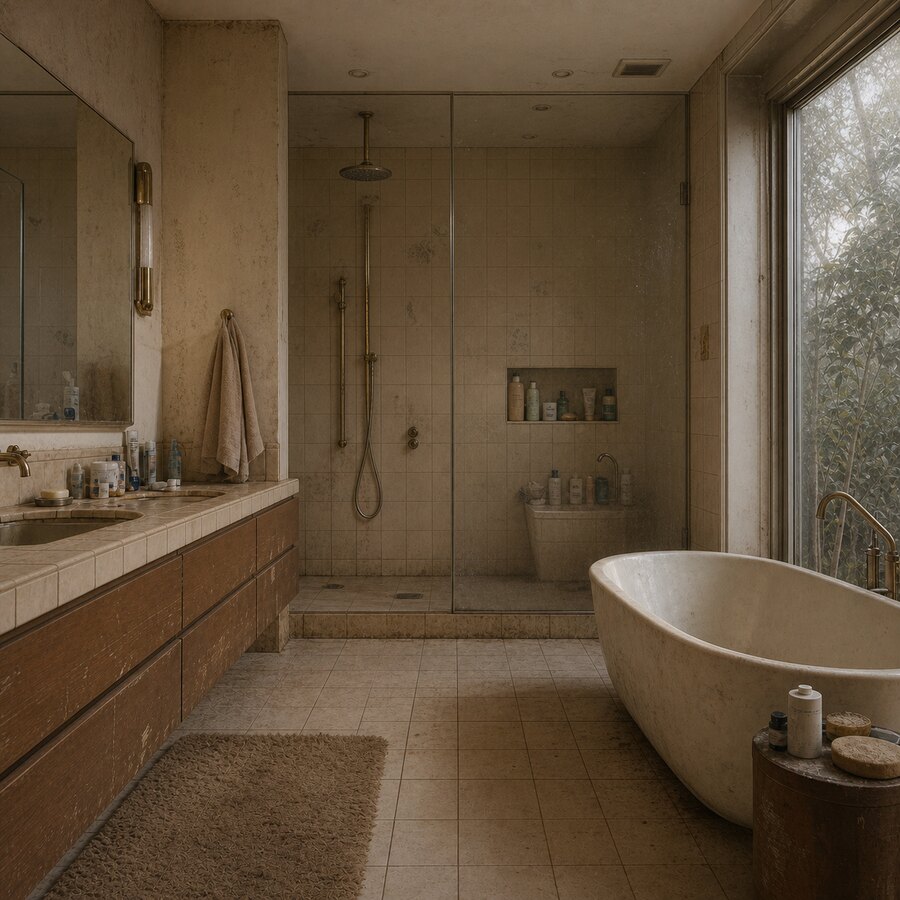
The best visual looks at this level are clean and simple: white sanitaryware, a compact vanity, chrome fittings, painted walls, and tiles only in wet zones. A soft neutral wall colour, a framed mirror, and better lighting can make the room feel designed rather than merely replaced.
Mid-range bathroom: £8,000-£15,000
This is where many homeowners get the strongest result. A mid-range budget can usually cover better sanitaryware, a fitted vanity, stronger storage, improved lighting, a better shower, more tiling, a heated towel rail, and proper finishing around awkward corners.
Style options widen here. You can aim for a hotel-inspired shower room, a soft spa look with stone-effect porcelain, a modern family bathroom with a bath and shower screen, or a bolder scheme with coloured tiles behind the vanity. If you want to test those ideas visually before committing, try the AI studio with a photo of your current bathroom.
Luxury bathroom: £18,000-£35,000+
Luxury budgets rise because the work becomes more complex. Common upgrades include wall-hung WCs, concealed cisterns, frameless glass, underfloor heating, bespoke storage, recessed niches, large-format porcelain, microcement-style finishes, premium brassware, smart mirrors, and layout changes.
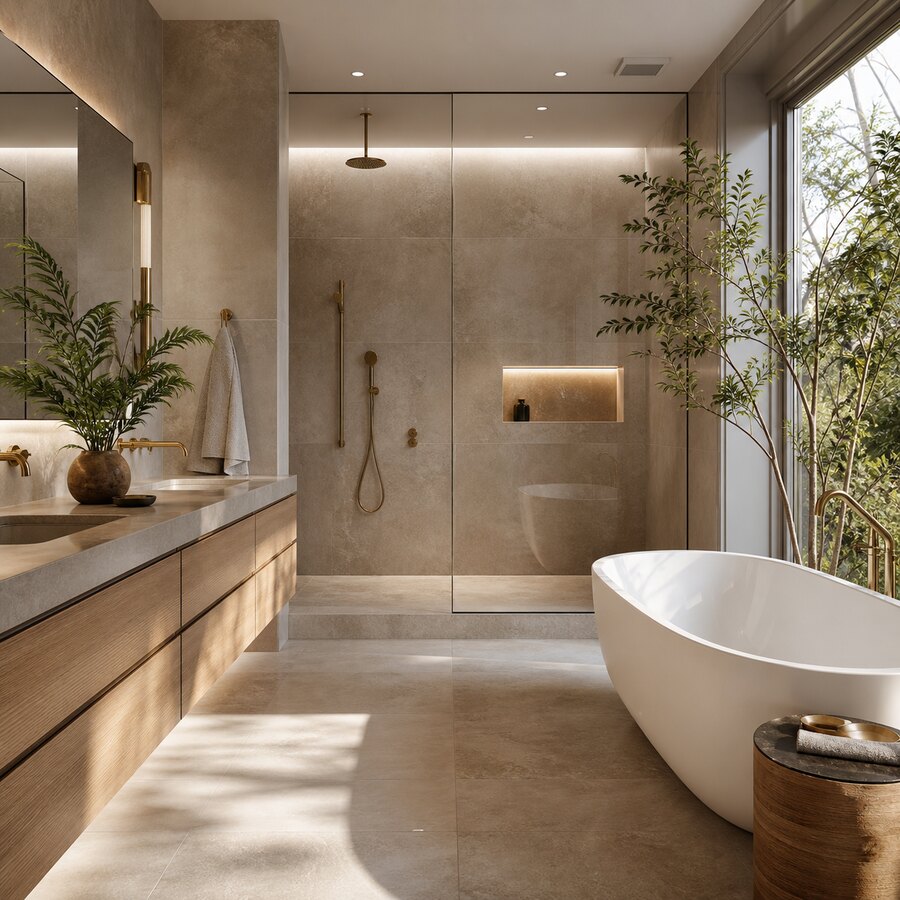
The look can be dramatic: fluted wood vanities, brushed brass, walk-in wet-room showers, marble-effect walls, warm lighting, and carefully hidden storage. The important point is that the build quality must match the finish. Tanking, falls, ventilation, floor levelling, and access panels are not glamorous, but they are what stop a luxury bathroom becoming an expensive problem.
What changes the price most?
The room size matters, but it is rarely the only issue. Labour can be a large share of the total because bathroom work brings several trades into a small, wet, highly detailed room. A quote may include rip-out, waste disposal, plumbing, electrics, plastering, tiling, flooring, decorating, fitting, sealing, and snagging.
Costs climb when you move the toilet, change from a bath to a wet room, discover rotten floorboards, need new extraction, use heavy or large tiles, tile every wall, or choose products with long lead times. Older UK homes can also need extra preparation because walls are out of square or previous pipework has been patched several times.
Budget looks that do not feel cheap
If you are keeping costs low, make the layout do the hard work. A white bath, white basin, and simple WC are not a design failure; they are a quiet base. Spend carefully on one feature, such as a vanity unit, mirror light, patterned floor, or shower screen.
Good budget combinations include white metro tiles with painted walls, stone-look vinyl with a slim vanity, or a monochrome scheme with black accessories used sparingly. Avoid buying the cheapest version of everything. A reliable shower, good taps, and proper waterproofing are better investments than a decorative item that can be changed later.
Mid-range looks with the best value
Mid-range bathrooms can look far more expensive when the palette is disciplined. Choose two or three finishes, then repeat them: one tile, one metal finish, one wood or painted vanity tone. This stops the room feeling busy and helps a smaller UK bathroom feel calmer.
Popular mid-range looks for 2026 include warm minimalism, soft green or clay-coloured tiles, stone-effect porcelain, brushed nickel fittings, and mirrored storage cabinets. For more visual planning ideas, browse our before and after room makeovers, our guide to small UK living room ideas, and the post on 2026 interior design trends you can test on your own room photo.
Luxury looks worth the extra spend
A luxury bathroom should feel better every day, not just photograph well. The best upgrades are often practical: a larger walk-in shower, warmer floor, quieter extractor, better storage, softer lighting, and a vanity height that works for the people using the room.
Spend more where touch and durability matter. Brassware, shower controls, concealed frames, glass, and tiles take daily wear. If the budget is stretched, choose one premium surface and keep the rest restrained. For example, a marble-effect shower wall can pair with plain painted walls and a simple vanity without losing the luxury feel.
How to set your bathroom budget
Start with the result you need, not the products you like. Is this a quick improvement before selling, a family bathroom that must survive daily use, or a long-term upgrade for comfort? Once that is clear, divide the budget into build work, products, finishes, and contingency.
Ask trades for itemised quotes where possible. Check whether rip-out, waste, plastering, electrics, tiling materials, sealant, making good, and VAT are included. If two quotes are far apart, compare the assumptions before assuming one is overpriced.
Before you order, create a visual plan. Uploading your current room to the AI studio is a low-pressure way to compare budget, mid-range, and luxury looks without buying samples for every possible direction.
FAQ
What is the average bathroom renovation cost in the UK in 2026?
A realistic average for a professionally fitted UK bathroom in 2026 is often around £8,000-£15,000 for a mid-range project. Smaller like-for-like updates can be lower, while luxury rooms, wet rooms, and projects with layout changes can be much higher.
Can I renovate a bathroom for under £5,000?
Yes, but the scope needs to be controlled. Keep the layout, limit tiling, choose standard sanitaryware, and avoid moving plumbing. Under £5,000 is more realistic for a compact refresh than a full redesign with premium finishes.
What is the most expensive part of a bathroom renovation?
Labour and preparation are often the biggest combined cost, especially tiling, plumbing, electrics, waterproofing, and making damaged surfaces good. Visible products matter, but hidden work can decide whether the bathroom lasts.
Is a wet room more expensive than a normal bathroom?
Usually, yes. A wet room needs careful waterproofing, floor falls, drainage, tiling, and often more preparation. It can be worth it for access, space, or a luxury look, but it should be planned by someone who understands wet-area construction.
How can I make a budget bathroom look more expensive?
Use a simple colour palette, upgrade the mirror and lighting, choose one feature finish, hide clutter with a vanity or cabinet, and keep grout lines and sealant neat. A restrained room often looks more expensive than one with too many budget finishes competing.