
Quick answer: The most cost-effective way to renovate a small kitchen in the UK is to keep the existing layout, refresh visible surfaces, and spend only where it improves daily use or safety. If you are asking how to renovate a small kitchen on a budget UK, start with doors, handles, lighting, paint, storage and worktops before committing to new cabinets or plumbing moves.
A small kitchen can look dramatically better without a full strip-out. Separate cosmetic changes from essential trade work, test the look before you buy, and avoid expensive decisions that are hard to undo.
Key takeaways
- Keep the sink, cooker and appliances in roughly the same place if the layout works.
- Prioritise cabinet doors, handles, lighting, splashbacks, paint and worktops before replacing every unit.
- Use durable, kitchen-suitable finishes; cheap materials fail quickly in steam, grease and heavy use.
- Get qualified help for electrics, gas and major plumbing, even on a budget renovation.
- Preview colours, tiles and cabinet styles with AI before spending hundreds or thousands of pounds.
Start with the layout, not the shopping list
The biggest budget mistake is buying products before deciding what the room needs to do. Measure the kitchen, list the problems, and mark anything that already works. A compact UK kitchen may need clearer worktop space, better lighting, less visual clutter, or smarter storage.
If the current layout lets you cook, wash up and move safely, keeping it is usually the lower-risk choice. Moving a sink, gas hob, boiler, extractor route or washing machine connection can quickly turn a budget project into a trade-heavy renovation.
Questions to answer before you spend
- Is the problem mainly appearance, storage, workflow, damp, lighting or damaged fittings?
- Are the cabinet carcasses solid, level and free from water damage?
- Can the doors, plinths, handles or worktops be replaced while keeping the existing boxes?
- Do you need more sockets, safer electrics, better ventilation or a new extractor?
- Will the kitchen still suit the property if you sell or let it later?
Set a realistic UK budget range
For a small kitchen, a light cosmetic refresh might be possible from a few hundred pounds if you do some work yourself. A more complete budget update with replacement doors, laminate worktops, new lighting, splashback panels and fitting can move into the low thousands. A full new kitchen may run much higher once units, appliances, trades, flooring and waste removal are included.
Build your budget in layers. Put safety and leaks first, then function, then appearance. Also keep a contingency of 10-15% if you are opening up old units, replacing flooring, or working in a period property where hidden issues are more likely.
A sensible spending order
- Essential repairs: leaks, unsafe electrics, damaged floors, mould, poor ventilation.
- Daily function: sockets, lighting, extraction, worktop space, bin storage, drawer access.
- Visible upgrade: doors, handles, paint, tiles, splashbacks, flooring and worktops.
- Nice-to-have items: premium taps, integrated appliances, stone surfaces and custom joinery.
Keep the cabinets if the carcasses are sound
Cabinet carcasses are often the most expensive part to replace unnecessarily. If the boxes are sturdy, square and not swollen from water damage, replacing only the doors and drawer fronts can give the kitchen a new look for much less than a full refit. This is especially useful in small kitchens where every unit is visible.
Door replacement works best when the existing layout is sensible and the cabinet sizes are standard. If your units are older or bespoke, measure carefully and check hinge positions before ordering. Even new handles can modernise plain doors if the old holes can be reused or filled neatly.
Use paint carefully in a hardworking kitchen
Paint is one of the cheapest ways to change a kitchen, but kitchen paint has to cope with steam, grease and regular cleaning. Use a durable, washable finish on walls and proper cabinet paint or primer if painting doors. Do not rush the preparation: degreasing, sanding and priming matter more than the colour itself.
In a small UK kitchen, pale warm neutrals, soft greens, muted blues and off-whites can make the room feel lighter without looking clinical. Dark colours can work, but test them first because a narrow galley kitchen may feel smaller if every surface becomes heavy.
Upgrade lighting before choosing final colours
Small kitchens often look tired because they are badly lit. A single ceiling fitting can cast shadows where you prepare food. Under-cabinet lighting, brighter task lighting and a warmer bulb temperature can make the same surfaces feel cleaner and more deliberate.
Electrical work must be safe and compliant. Replacing a bulb is one thing; adding sockets, circuits or fixed lighting is not a place to cut corners. If the kitchen has old wiring, few sockets or signs of overheating, price the electrical work before spending the whole budget on finishes.
Choose worktops and splashbacks that fit the budget
Stone and quartz can look excellent, but they are rarely the lowest-cost route for a budget small kitchen. Good laminate, compact laminate, timber-effect surfaces and well-fitted splashback panels can still look sharp when the palette is coherent. In a small room, simple edges and fewer joins often matter more than a premium material.
For splashbacks, compare tiles, acrylic panels and upstands. Tiles can be affordable, but labour, trims and awkward cuts add cost. Panels may be faster in a compact galley kitchen, especially behind a sink or worktop run. Behind a hob, use a heat-suitable material and follow the manufacturer’s guidance.
Improve storage without filling every wall
A small kitchen does not automatically need more cupboards. Too many wall units can make the room feel narrower and darker. Instead, look for dead corners, awkward gaps and inefficient shelves. Pull-out baskets, internal drawers, pan racks, shelf risers and a better bin system can change how the kitchen works without changing the layout.
Open shelves can help a small kitchen feel lighter, but use them sparingly. They collect dust and grease, so they are best for items you use often rather than decorative clutter. If you are comparing layout ideas for another tight room, our guide to small UK living room ideas uses the same principle: remove visual noise before buying more furniture.
Preview the makeover before you buy
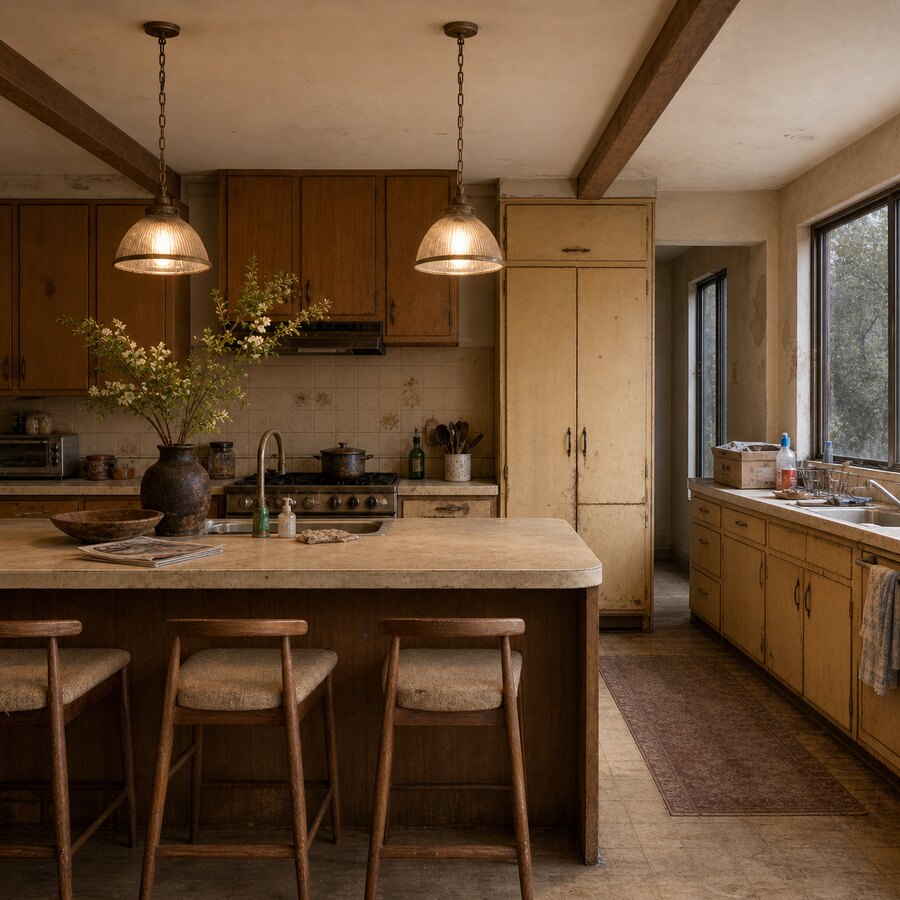
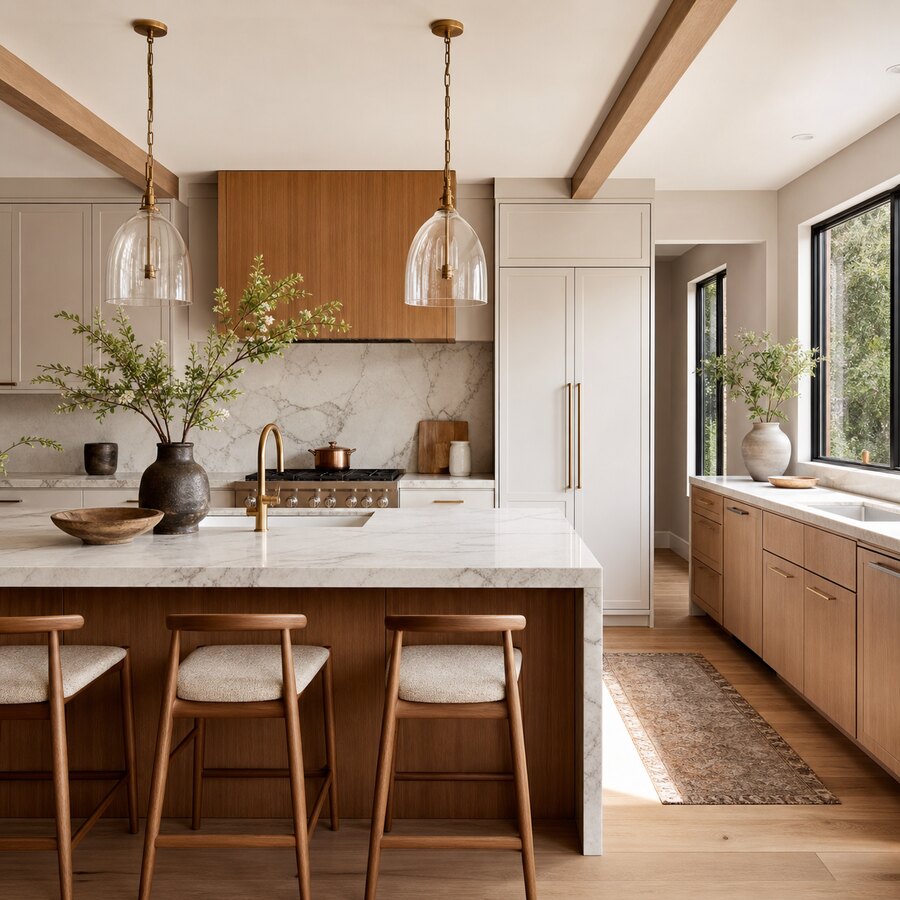
Budget renovation is partly about avoiding the wrong purchase. A colour that looks good on Pinterest may clash with your floor, daylight, appliances or cabinet shape. Before ordering doors, paint, tiles or flooring, upload a clear room photo and test several looks in an AI preview. You can try the AI studio to compare cabinet colours, modern splashbacks, warmer lighting and different worktop tones using your own kitchen image.
This does not replace measuring, samples or a fitter’s advice. It does help you narrow the choices before you spend. For example, you can test whether sage green doors make the room calmer, whether white tiles look too stark, or whether a darker worktop balances pale cabinets.
Where to save and where not to save
Good places to save
- Reusing cabinet carcasses if they are structurally sound.
- Choosing laminate worktops instead of premium stone.
- Using standard-size doors and off-the-shelf handles.
- Painting walls yourself after proper preparation.
- Keeping plumbing, gas and appliances in the same positions.
Bad places to cut corners
- Electrical safety, especially sockets, circuits and fixed lighting.
- Gas work, boiler work or cooker connections.
- Ventilation where damp, cooking smells or condensation are already a problem.
- Cheap taps, hinges and drawer runners that will be used every day.
- Skipping surface preparation before painting cabinets or tiles.
A practical budget plan for a small kitchen
First, clean and declutter the room so you can see the real surfaces. Photograph it in daylight and at night. Then decide whether the layout stays. If it does, price a refresh package: doors or paint, handles, lighting, splashback, worktop and any essential trade work.
Next, collect samples and test them together in the actual kitchen. A cabinet door sample, a worktop chip and a paint swatch should be viewed beside your floor and appliances. Use AI previews to shortlist looks, then physical samples to confirm texture, colour and durability.
Finally, sequence the work. Electrics, plumbing and repairs come before painting and splashbacks. Worktops usually come after cabinets are level and secure. If your bathroom is also on the project list, compare priorities with our UK bathroom renovation cost guide before splitting the budget too thinly.
FAQ
What is the cheapest way to renovate a small kitchen in the UK?
The cheapest reliable route is usually to keep the layout, reuse sound cabinet carcasses, replace or paint doors, update handles, improve lighting, and choose affordable worktops or splashbacks. Avoid moving plumbing, gas or major appliances unless the current layout genuinely fails.
Can I renovate a small kitchen for under £1,000?
Yes, but it will normally be a cosmetic refresh rather than a full renovation. Under £1,000 may cover paint, handles, lighting improvements, shelves, small storage upgrades and some DIY finishing. It is unlikely to cover new cabinets, appliances, worktops and professional fitting.
Should I paint kitchen cabinets or replace the doors?
Paint is cheaper if the doors are flat, sound and worth the preparation time. Replacement doors are usually better if the existing fronts are damaged, peeling, badly dated or difficult to paint neatly. In both cases, check that the cabinet carcasses and hinges are in good condition.
What makes a small kitchen look more expensive?
Consistent finishes, good lighting, tidy edges, simple handles, uncluttered worktops and a restrained colour palette make a small kitchen feel more expensive. Poorly fitted trims, mismatched whites, visible clutter and harsh lighting can make even new materials look cheap.
Is AI useful for planning a budget kitchen renovation?
AI is useful for previewing colour, cabinet, tile and style directions before you buy materials. It should not replace measurements, samples, building regulations or trade advice, but it can reduce guesswork and help you compare options quickly.